
NEWSMY STORAGE · SELECTION GUIDE
microSD for Security Recording: Questions About Endurance Before Ordering
A distributor receiving a request for “a card for security cameras” needs more than a capacity and a speed-class logo. Recording workloads differ, and an endurance requirement must be matched to documented model information. Use these questions to define the application without treating every microSD card as a surveillance-qualified product.
1. Which camera and recording mode will use the card?
Record the exact camera or recorder model and its manual’s supported card format, capacity and recording-class requirements. Ask whether recording is continuous, event-triggered or scheduled, and whether one or several streams are written. Resolution alone does not describe the actual recording workload.
2. What does the speed-class label actually answer?
The SD Association defines recording speed classes around minimum sequential-writing performance under specified conditions. Those class symbols do not state a card’s service life, total write endurance or approval for a named camera. Treat the required recording class and the required endurance as separate items in the purchasing brief.
3. How will the device overwrite and retain recordings?
Ask for the configured bitrate, expected recording hours, retention target and loop-recording behaviour. Include the operating environment and power-interruption concerns. These are inputs for a technical review, not a basis for inventing a service-life number from the capacity label. Ask the camera supplier about its recommended media and maintenance procedure.
4. What is confirmed for the current TF-H2 range?
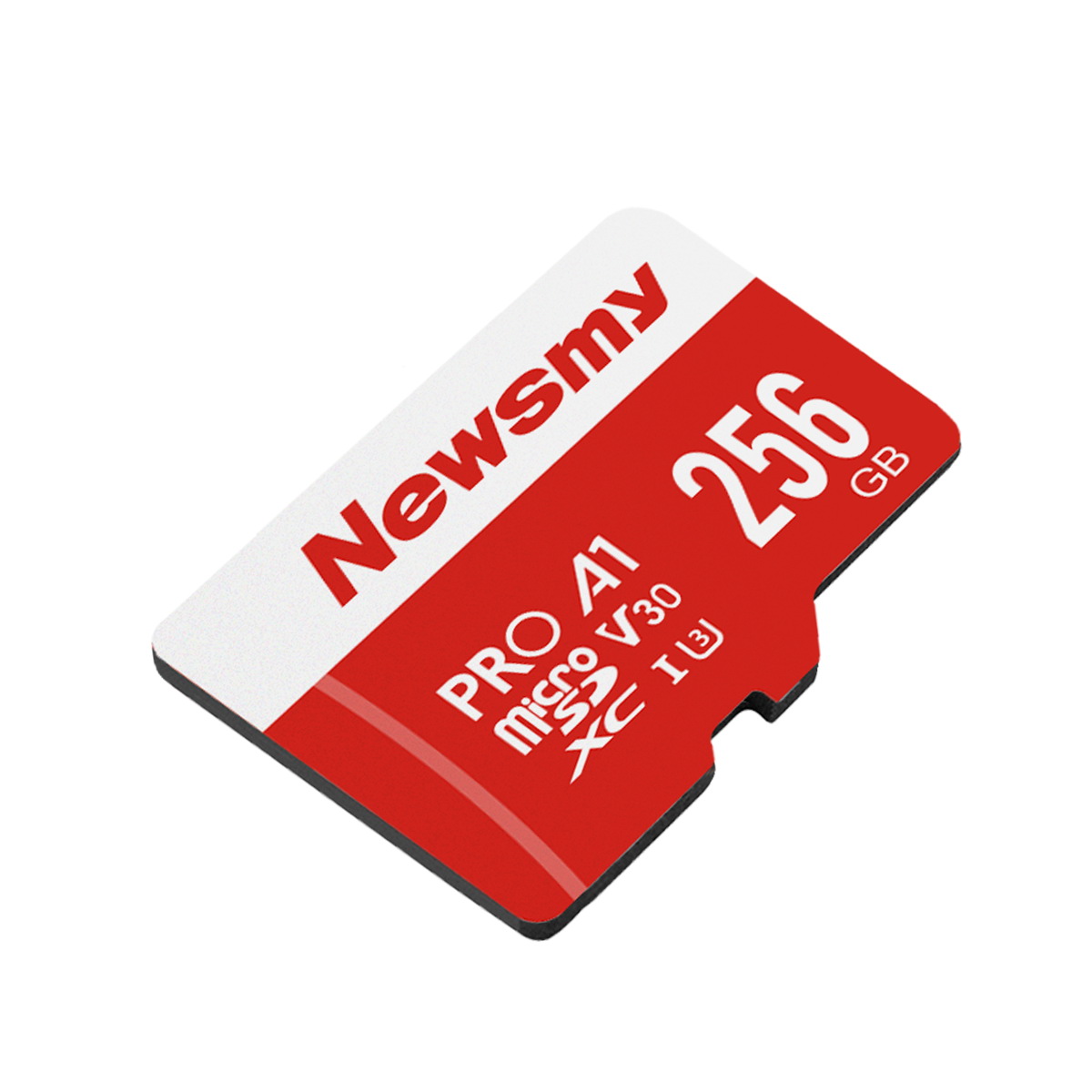
NEWSMY TF-H2 is listed as microSD / TF, UHS-I, U3 and V30 in 16 GB, 32 GB, 64 GB, 128 GB and 256 GB. Those are the published format, interface, class and capacity facts. The current listing does not publish a surveillance endurance rating, rated recording hours or camera-specific approval; do not add those claims to an offer.
5. Which evidence and order terms resolve the open requirement?
If endurance is essential, ask for model- and capacity-specific documentation, the relevant workload and test scope, and written confirmation of suitability for the application. Confirm whether the warranty terms cover that intended use; a published warranty period alone is not an endurance specification. If evidence is unavailable, keep the requirement unresolved rather than substituting a speed badge.
Questions before ordering
Does V30 mean a card is approved for continuous security recording?
No. It identifies a defined recording speed class, not a surveillance endurance or camera-approval claim.
Can I calculate guaranteed recording life from capacity alone?
No. Capacity alone does not provide a model’s write-endurance specification or the application’s full workload.
Should the quotation say “high endurance” for TF-H2?
Not without supporting model-specific documentation. Use the verified listed facts and ask about the unresolved endurance requirement.
Explore the matching NEWSMY models
Compare listed specifications, capacities, available colours and warranty periods on the model pages.
Compare microsd / tf cards →Technical references
Industry references explain the general standards. Product information follows the current NEWSMY range; the host manual and confirmed quotation determine your configuration.
SD Association: speed classes ↗SD Association: SD capacity standards ↗The NEWSMY Storage approach
NEWSMY’s customer-centred philosophy brings technology and service into the same conversation. For recording storage, responsibility means separating verified specifications from open application questions. We encourage buyers to share the real workload and request relevant evidence before choosing a configuration for an important recording task.